Bluemethane at Harvard Methane Convening
Methane finally has a room of its own.
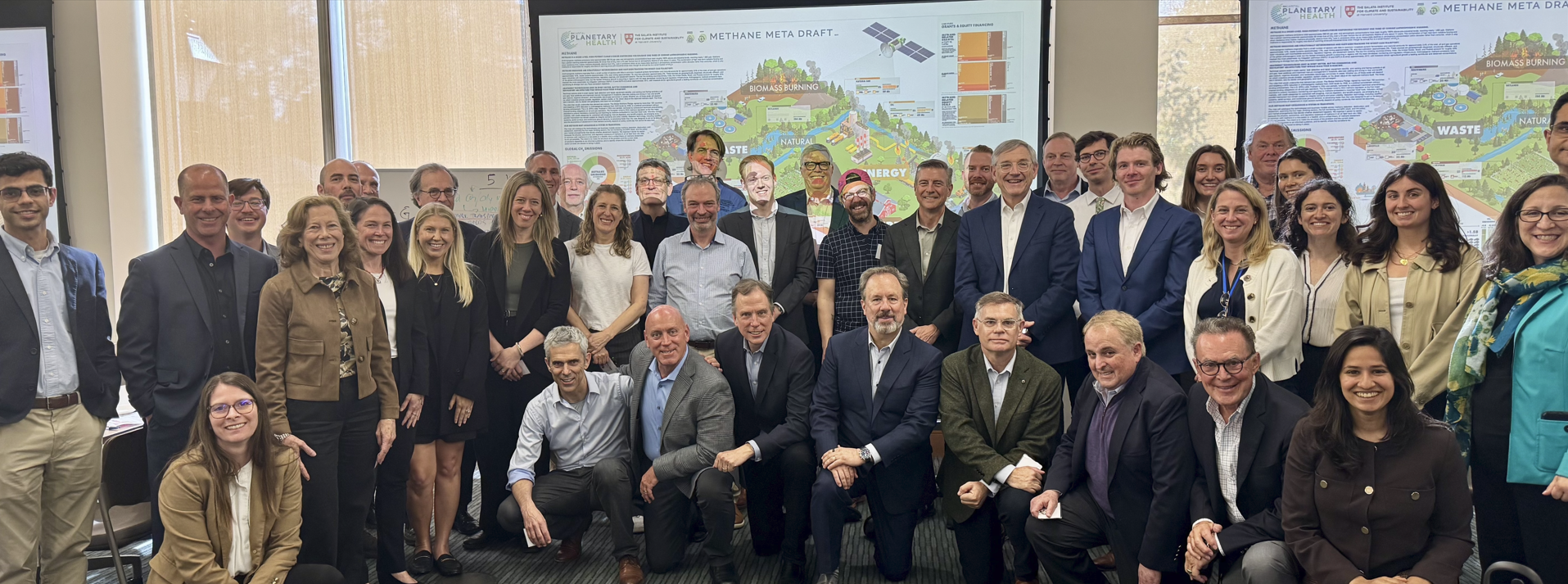
In May, Bluemethane was invited to participate in a methane convening at Harvard University. It was unlike most climate gatherings we have attended.
For most of the history of climate policy, methane has been discussed as a footnote to other industries. Oil and gas talks about it. Agriculture talks about it. Wastewater treatment talks about it. But methane itself as a climate problem, a funding priority, and a solvable challenge, has rarely had a dedicated seat at the table. The Harvard convening changed that. Methane was the subject, not a side note.
What made it distinctive was the combination of people in the room: academics, industry leaders, and financiers, all asking the same question – why is a gas responsible for over 30% of current global warming receiving less than 1% of climate investment, and what would it actually take to change that?
Harvard’s Initiative on Reducing Global Methane Emissions, supported by the Salata Institute for Climate and Sustainability, brings together 17 faculty members across engineering, law, business, government, and science, working to drive progress in global methane emissions reductions through research and direct engagement with policymakers and industry. As the Initiative’s Principal Investigator Professor Robert Stavins has put it, when the target is 2030 rather than 2100, methane becomes “incredibly important” because its fast-acting warming power makes it one of the highest-leverage interventions available right now.
The conversation at Harvard made one thing clear: closing the methane funding gap is not a problem any single actor can fix. It requires academics to generate the measurement science, industry to deploy the technology, and finance to build the instruments that can price the value of a tonne of methane prevented – not just captured. Those three communities rarely sit together around the same problem. In May, they did.
Bluemethane exists at the operational end of this challenge. We build the technology that makes measurement, capture, and prevention real, in the field, at scale. Being part of a conversation at this level is a reminder of why that work matters and how much further the whole ecosystem needs to go.